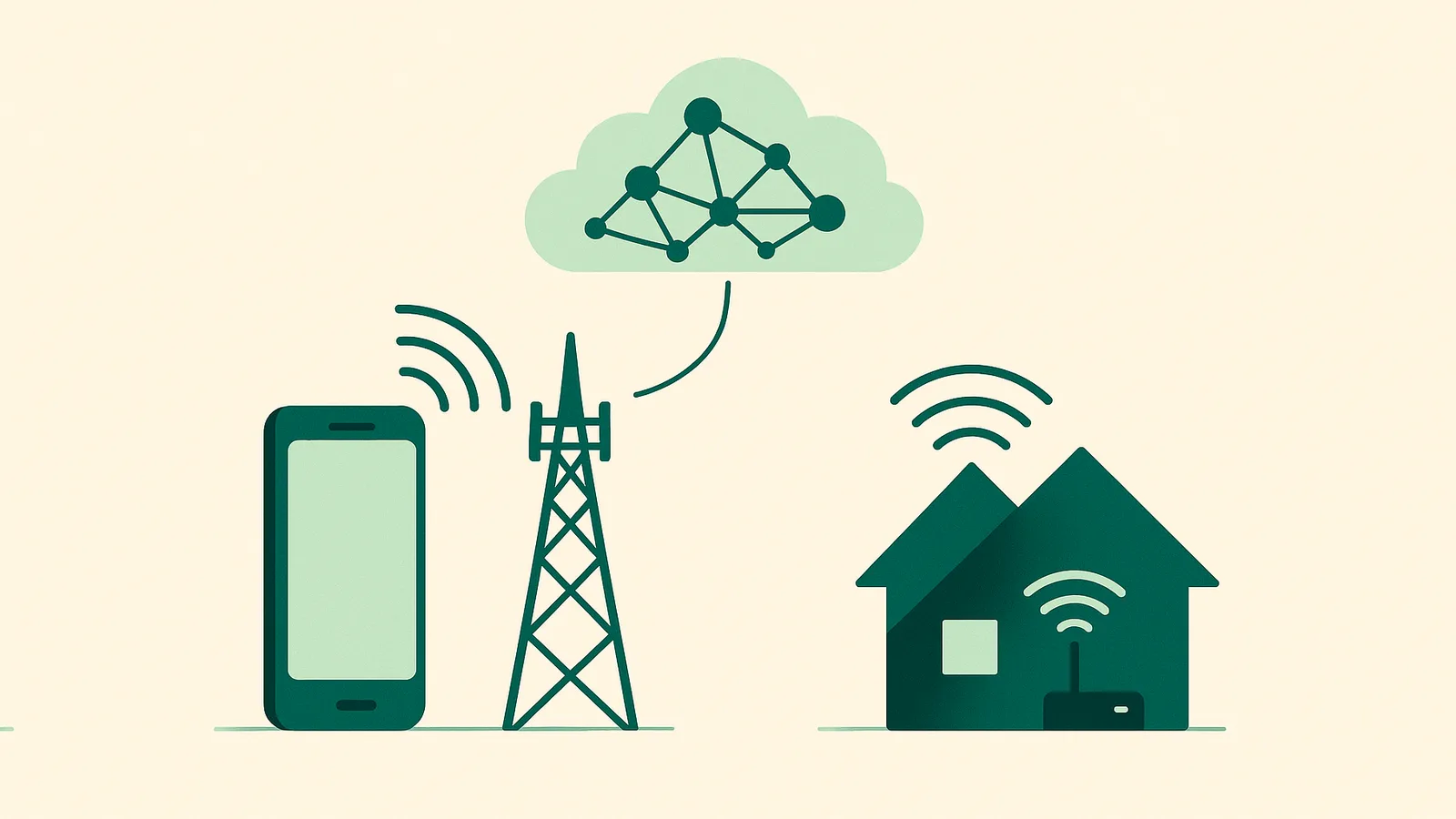
Residential vs Datacenter Proxies: Which Should You Choose?
A neutral, practical comparison of residential and datacenter proxies across origin, trust, speed, cost, and use cases — so you can pick the right one for your task.
By SocksNode TeamPublished Jan 15, 20266 min read

Quick answer: Choose residential proxies when you need IPs that websites perceive as ordinary home users and when accuracy of localized data matters more than raw speed. Choose datacenter proxies when you need maximum speed and the lowest cost for tasks where the IP's origin does not affect results. The best choice depends on the task, not on which type is "better."
Proxies route your web requests through an intermediary IP address. The two most common categories — residential and datacenter — differ mainly in where their IPs come from and how ordinary sites perceive those IPs. Understanding that difference helps you match the tool to legitimate jobs like market research, price monitoring, ad verification, and SEO monitoring.
Where the IPs come from
Residential proxies use IP addresses assigned by internet service providers (ISPs) to real home connections. Because the address belongs to a consumer ISP block, a website sees traffic that looks like a normal person browsing from a home network in a specific city or state.
Datacenter proxies use IPs owned by cloud and hosting providers. They live in data centers, are cheap to provision at scale, and are extremely fast — but their address ranges are publicly identifiable as belonging to hosting companies rather than households.
How sites perceive the IP
This is the core practical difference. Many websites classify incoming IPs by their network origin. A residential IP is perceived as an ordinary consumer connection, so localized content — regional pricing, local search results, city-specific listings — tends to render exactly as a real visitor in that location would see it. A datacenter IP is perceived as commercial infrastructure, which is perfectly fine for many tasks but can mean some sites serve generic or different content.
Framed neutrally: it is not about hiding or evading anything. It is about whether the IP's origin causes a site to show you the same data a local user sees. For localized research, that fidelity is the whole point.
Speed, cost, and reliability
Datacenter proxies win on raw speed and price because server bandwidth is cheap and abundant. Residential proxies cost more per gigabyte because the underlying network capacity is sourced from real consumer connections, but they deliver higher fidelity for location-sensitive work.
Comparison table
| Factor | Residential proxies | Datacenter proxies |
|---|---|---|
| IP source | Real ISP-assigned home connections | Cloud and hosting provider ranges |
| Typical speed | Fast, varies with the host connection | Very fast and consistent |
| Cost per GB | Higher | Lower |
| Reliability for localized data | High — content matches a real local visitor | Lower — some sites serve generic content |
| Best for | Localized research, ad verification, price monitoring, SEO | Bulk fetching, internal tools, APIs where origin is irrelevant |
Choosing based on the task
- Need city or state accuracy? Residential is usually the right fit, because the data reflects what a real local visitor sees.
- Fetching your own APIs or origin-agnostic content at high volume? Datacenter is faster and cheaper.
- On a tight budget with location-neutral needs? Datacenter first, then upgrade selectively.
- Doing serious price monitoring or ad verification? Residential accuracy usually pays for itself.
SocksNode focuses on flexible residential bandwidth from 1GB, with US city and state targeting, HTTPS and SOCKS5 support, and both rotating and sticky sessions. If localized accuracy is your priority, you can compare plans on our pricing page or create an account to get started.
Key takeaways
- Residential and datacenter proxies differ mainly in IP origin and how sites perceive that origin.
- Residential IPs look like ordinary home users and shine for localized, location-sensitive data.
- Datacenter IPs are faster and cheaper and are ideal when the IP's origin does not affect results.
- Neither type is universally "better" — the right choice is driven by your specific, lawful task.
- SocksNode focuses on residential proxies for high-fidelity localized data collection.
FAQ
Which is cheaper, residential or datacenter?
Datacenter proxies are almost always cheaper per gigabyte because server bandwidth is abundant. Residential proxies cost more because their capacity comes from real consumer connections, but they offer higher fidelity for location-sensitive tasks.
Which is better for price monitoring?
Residential proxies are usually the better fit for price monitoring, because regional and localized pricing renders the same way a real local shopper would see it. Datacenter proxies may return generic pricing on some sites.
Are datacenter proxies bad?
No. Datacenter proxies are an excellent, cost-effective tool for high-volume fetching, internal tools, and any task where the IP's origin does not change the result. They are simply less suited to localized data collection.
Does SocksNode offer both types?
SocksNode focuses on residential proxies, delivering flexible bandwidth from 1GB with US city and state targeting, HTTPS and SOCKS5, and rotating or sticky sessions — optimized for accurate, localized web-data collection.