Mobile vs Residential Proxies: Which Should You Choose?
A neutral, practical comparison of mobile (4G/5G) and residential proxies — origin, trust, coverage, billing, and use cases — so you can pick the right one for your task.
By SocksNode TeamPublished Jul 22, 20265 min read
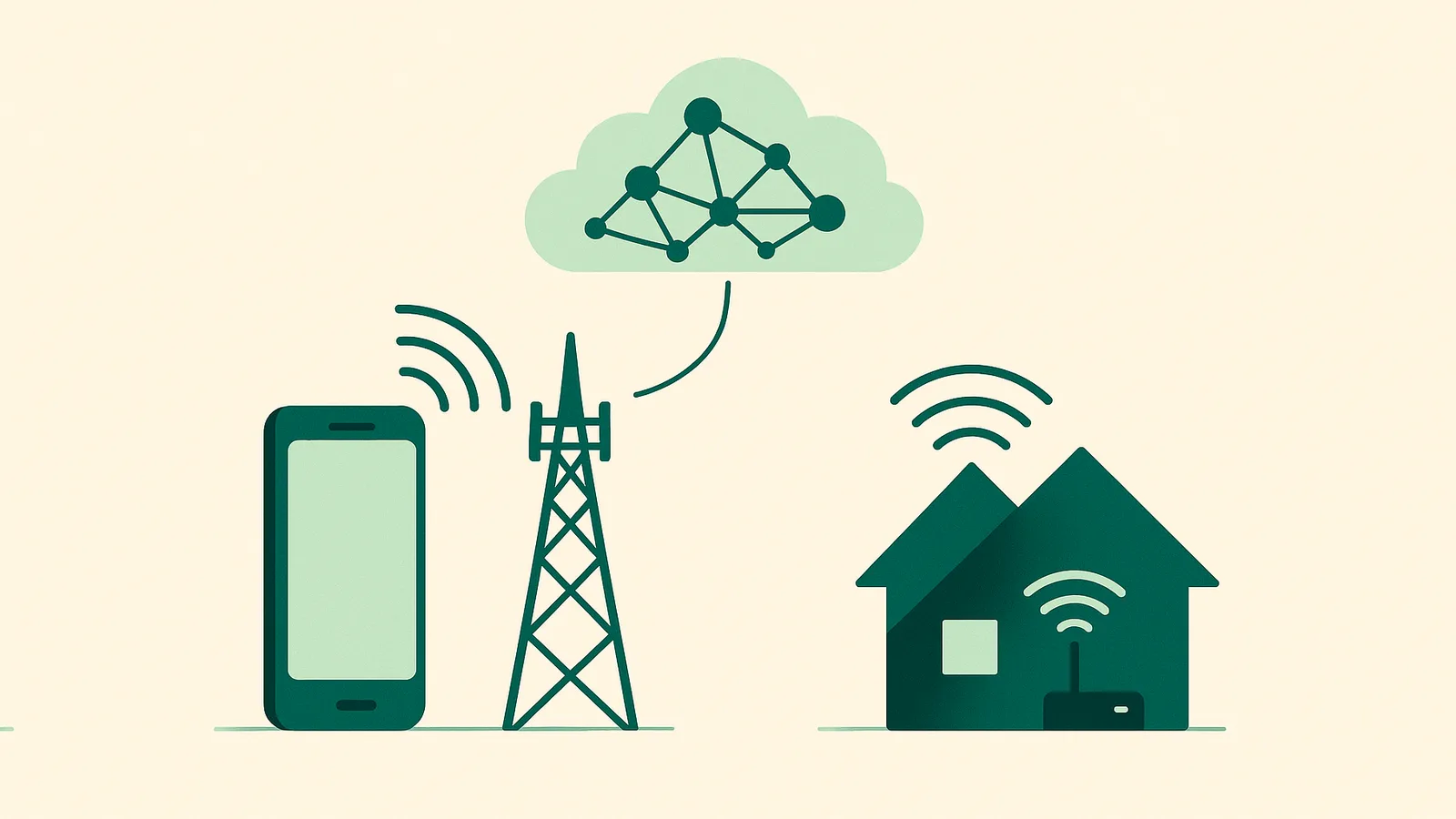
Quick answer: Choose residential proxies when you need the broadest country, city, or ISP coverage and you're billed most efficiently by data volume. Choose mobile (4G/5G) proxies when you need an IP from a real carrier network — trusted by platforms that treat mobile traffic differently — and you want a dedicated port with free, unlimited location switching. Neither is universally "better"; the right pick depends on your task.
Both proxy types route your traffic through a real device's IP rather than a datacenter's, but the device — and how sites perceive it — is different. Understanding that difference helps you match the tool to the job: geo-targeted research, ad verification, social account management, or app testing.
Where the IPs come from
Residential proxies use IP addresses assigned by internet service providers to real home connections — the kind of IP a router hands out to a house or apartment.
Mobile proxies use IP addresses assigned by mobile network operators to real SIM cards on 4G LTE or 5G networks — the kind of IP a phone gets the moment it drops Wi-Fi and switches to cellular data.
How sites perceive the IP
This is where the two diverge in practice. A residential IP reads as an ordinary home broadband connection, and because residential ranges span hundreds of countries down to the city and ISP, they're the strongest choice when what you need is geographic accuracy — seeing the same regional pricing, search results, or listings a real local visitor sees.
A mobile IP reads as carrier traffic. Because mobile carriers route enormous numbers of real subscribers through carrier-grade NAT — meaning thousands of genuine phones can share the same public IP at once in the real world — many platforms that scrutinize IP reputation trust mobile ranges more than almost any other traffic type. That's exactly why mobile IPs get flagged less on platforms built around phone-first behavior, at the cost of far narrower country coverage than residential.
Coverage, billing, and rotation
Residential is priced per gigabyte, with a balance that never expires — you pay for what you move, across 200+ countries with city, state, and ISP-level targeting. Rotating or sticky sessions are your choice per generated proxy.
Mobile is priced as a dedicated port rental, from a 2-hour trial up to 30 days, covering up to 10 countries with US state-level targeting. Rotation happens automatically roughly every 15–30 minutes, or you can trigger it on demand — and switching country, state, or carrier is free and unlimited, with your host:port staying fixed the entire time.
Comparison table
| Factor | Residential proxies | Mobile (4G/5G) proxies |
|---|---|---|
| IP source | Real ISP-assigned home connections | Real SIM cards on 4G/5G carrier networks |
| Coverage | 200+ countries, city/state/ISP targeting | Up to 10 countries, US down to 19 states |
| Billing model | Per GB, balance never expires | Dedicated port rental, 2 hours to 30 days |
| Rotation | Rotating or sticky, your choice | Automatic (~15–30 min) or on demand |
| Switching location | Generate new targeting per session | Free, unlimited — host:port never changes |
| Platform trust | Reads as ordinary home broadband | Reads as carrier traffic, often trusted most |
| Starting price | $0.34/GB | $30/month (short trials available) |
Choosing based on the task
- Need pinpoint city or ISP targeting, in a specific country? Residential's coverage wins.
- Managing or warming social/mobile-app accounts where carrier trust matters? Mobile is built for exactly this.
- Billed by data volume, with bursty or unpredictable usage? Residential's pay-per-GB fits better.
- Want one identity for days or weeks, switching location freely at no extra cost? A mobile port does that natively.
- Testing across dozens of countries on a budget? Residential's per-GB entry point is the cheaper start.
SocksNode runs both networks side by side: residential bandwidth from as little as 1 GB with city, state and ISP targeting, and real 4G/5G mobile ports with free country/state/carrier switching. Compare both on our pricing page, or create an account to try either.
Key takeaways
- Residential and mobile proxies both use real end-user IPs — the difference is the network they come from and how platforms treat that traffic.
- Residential wins on geographic breadth and precision, and its per-GB billing suits variable, high-volume workloads.
- Mobile wins on platform trust for carrier-sensitive traffic, and its dedicated port includes free, unlimited location switching.
- Neither type is universally better — the right choice depends on your specific, lawful task.
- SocksNode offers both, so you can match the network to the job instead of compromising.
FAQ
Is mobile always better than residential for avoiding blocks?
Not always. Mobile IPs are trusted highly by platforms built around carrier-grade NAT sharing, but residential's far larger country and city coverage makes it the better fit whenever geographic precision matters more than carrier trust.
Which is cheaper?
It depends on usage. Data-heavy, variable workloads are usually cheaper on residential's per-GB pricing. A single long-running identity with unlimited location changes is usually cheaper as one mobile port than as constantly-regenerated residential sessions.
Can I switch country on a mobile proxy the same way I target a country on residential?
Yes, but the mechanism differs: residential targeting is set per generated session (instant, unlimited combinations); a mobile port's country/state/carrier is changed live on the same port, for free, with the host:port staying fixed.
Does SocksNode offer both mobile and residential proxies?
Yes — SocksNode runs both networks. Residential proxies are priced per GB with 200+ countries and city/ISP targeting; mobile proxies are real 4G/5G carrier IPs sold as a dedicated port with free location switching.


